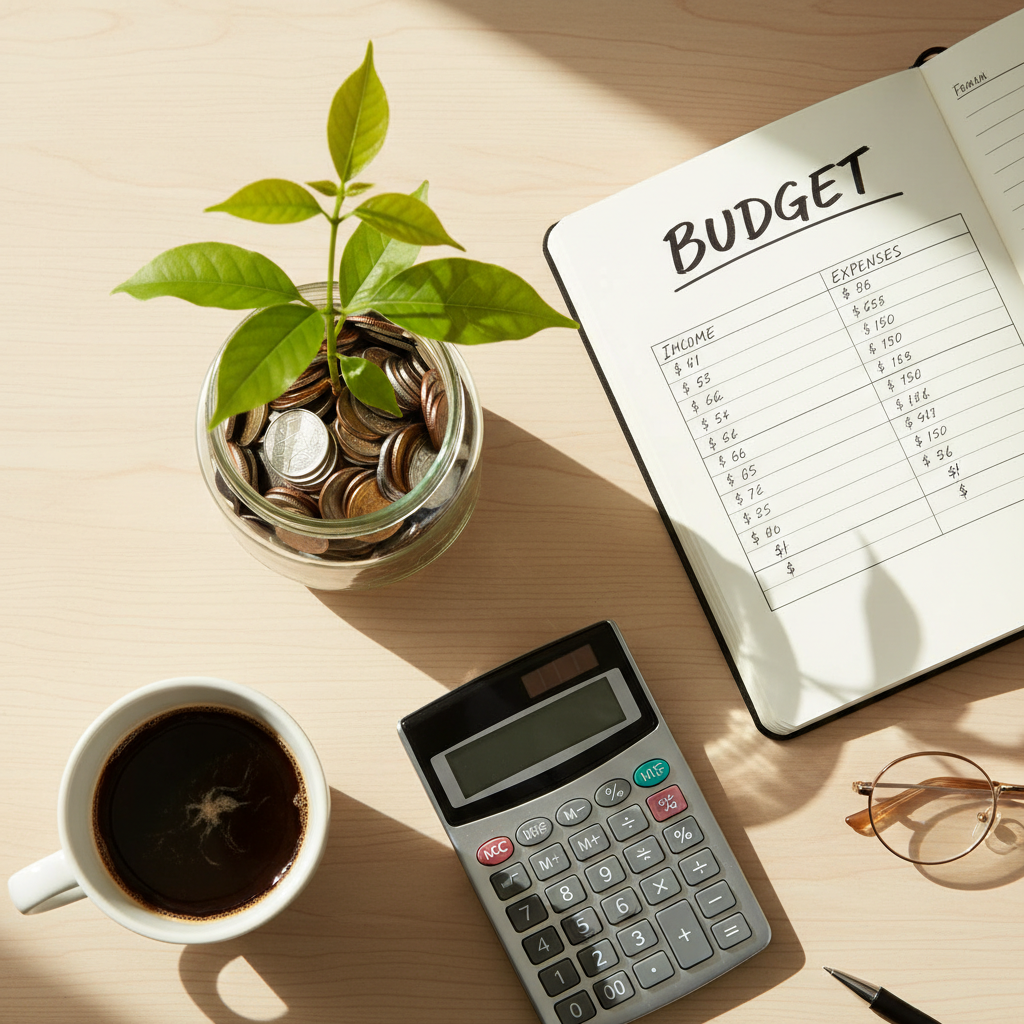
You do not need a colour-coded spreadsheet, a finance degree or a six-figure income to improve your money. You need a simple system you can keep using when life is busy, bills rise and motivation disappears.
The basics do most of the work: understand your cash flow, make the gap between income and spending positive, pay yourself first, and resist turning every increase in income into a bigger fixed-cost life.
That matters right now. ABS figures released in August 2026 showed annual CPI inflation of 3.5% to July, with housing up 5.0% and food up 3.2%. Many households are not careless; they are being squeezed. Cotality’s July 2026 data put the national median weekly rent at a record $705. Finder reports that three in five mortgage holders feel financial stress.


Start with cash flow, not guilt
Cash flow simply means money in minus money out. If the result is positive, you have choices. If it is negative, debt, missed bills or savings withdrawals often fill the hole.
For one month, use bank statements and card transactions to total your actual spending. Do not guess. Include annual and irregular costs: car registration, gifts, school costs, medical appointments, streaming renewals and repairs.
Put spending into three plain groups:
- Essentials: housing, utilities, food, transport, insurance and minimum debt payments.
- Flexible spending: takeaway, clothes, entertainment, subscriptions and extras.
- Future-you money: savings, extra debt repayments and investing.
Suppose your take-home pay is $5,400 a month. Your essentials are $3,650, flexible spending is $1,350, and you save $100. That leaves $300 unaccounted for. That $300 is not a moral failure; it is a clue. It may be small taps, online shopping, cash withdrawals or bills you forgot to average across the year.
Your first target is not an impressive savings rate. It is clarity. Once you can see the pattern, you can choose what to change.


Build the gap one decision at a time
The “gap” is the amount left after needs and planned wants. A $50 weekly gap is $2,600 a year. A $150 weekly gap is $7,800. It can fund a starter emergency buffer, knock down expensive debt or make a future move less frightening.
Look first for changes that are repeatable and do not make life miserable. Renegotiate insurance, compare phone plans, cancel unused subscriptions, plan a few lower-cost meals, or set a weekly fun-money limit. Then look at bigger levers: housing, transport, work hours, debt rates and income.
Avoid treating credit as part of your income. Money.com.au reported total Australian credit-card debt of $44.23 billion in August 2026, and RBA data puts average card rates around 20.99% a year. A $3,635 balance at roughly 21% costs about $763 in interest over a year if it stayed unchanged. Paying it down is a guaranteed return equal to the rate you avoid.
If you are falling short after cutting reasonable extras, the answer may not be “try harder”. Contact lenders, utilities or your landlord/property manager early where appropriate, ask about hardship options, and seek free financial counselling. A budget cannot solve a rent increase or low income on its own.

Pay yourself first, automatically
Paying yourself first means moving money to priorities immediately after payday, before it gets absorbed by everyday spending. Automation makes this a system rather than a test of willpower.
A workable order for many people is:
- Cover bills and minimum repayments.
- Build a small emergency buffer, perhaps $1,000 first.
- Attack high-interest debt, especially credit cards.
- Grow emergency savings toward several months of essential costs.
- Invest for long-term goals once expensive debt is under control.
Using the earlier example, set an automatic transfer of $75 each week to a separate savings account and $75 each week extra to a credit card. That is $650 a month. In a year, you have directed $7,800 before interest effects, rather than hoping there is money left at month-end.
Keep the savings account separate from your daily spending account. Name it for its purpose in your banking app: “Buffer”, “Moving fund” or “Future home”. The point is not the label. The point is making the money slightly harder to spend by accident.

Give pay rises a job before they vanish
Lifestyle creep is what happens when a raise becomes a pricier car, higher rent, more delivery meals and subscriptions you barely notice. Enjoying more of your income is allowed. The trap is increasing fixed commitments so much that you never become more secure.
Try a raise rule. When your take-home pay rises by $200 a month, allocate $100 to future-you money, $50 to a specific quality-of-life upgrade, and leave $50 for flexibility. Your life improves now, but your savings and debt position improve too.
This also applies to windfalls. Split a tax refund, bonus or overtime payment before spending it. A simple 50/30/20 split could mean 50% to debt or savings, 30% to a planned need, and 20% for enjoyment.

Review monthly, reset without drama
Money systems need maintenance, not perfection. Spend 20 minutes once a month checking balances, upcoming bills, debt progress and whether your automatic transfers still fit.
If you overspend, do not abandon the plan until January. Ask one useful question: what changed? Perhaps groceries rose, a school expense arrived, or you underestimated transport. Update the numbers and continue.
The fundamentals can feel unglamorous, but they create something more valuable than a clever money trick: room to breathe. Start with one payday, one transfer and one honest look at where your money is going. That is how lasting change begins.
This article is general information only and not personal financial advice.