
Money and the mind are Connected ! Every Financial Decision you make about Spending, Saving, Investing, Negotiating and Borrowing is all filtered through your Mind Anxious minds lead to Impulse Buys Panic Selling at the Bottom of Market Cycles and take on Debt for things they don't need. Calm Minds hold the Plan, Ride out Volatility, Negotiate from Strength, and Say No to Debts Easily. Meditation is how you Deliberately Practice being this person one quiet morning at a time. This is not a Spiritual Guide dressed as Finance Article. Meditation and Calm Mind is the Backbone of being able to make Calm, Decisive, Calculated Decisions about Exactly what you Want in your Financial Life and eliminating the things you don't need.
Consistent Meditation Measurably reduces cortisol, Improves Decision under stress, Strengthens impulse control, and Improves the very functions responsible for Long-Term Planning. If someone offered you those Options you would take them every day.
Why Meditate about Money ?
Money is consistently ranked among the Top 3 Most Important things in anyones life. It can determine the entire outcome of Happiness, Health and Relationships. That's why there is so much Emphasis and Focus on and about Money and Finances
You literally cannot think clearly if you are stressed and worried about money. How you are going to pay your bills, how you are going to afford rent this week, will your Electricity get cut-off ? This is why bad financial decisions compound stressful life events. Meditation calms your nervous system and allows you to think more clearly and make better financial and Life Choices.
Daily Money Meditation
- Calm and Settle Sit upright, feet flat, hands resting comfortably. Close your eyes. Breathe in through your nose for 4 seconds, hold for 4 seconds, exhale slowly through your mouth. Repeat six times. You should already feel your shoulders drop.
- Body Scan Slowly bring your attention to each place in your body where you carry money stress. Jaw. Chest. Stomach. Shoulders. Do not try to fix anything. Just notice, and breathe warmth into that area. Awareness alone begins to soften it.
- Gratitude Bring to mind three things money has already given you today — however small. A hot shower. A meal. A functioning phone. A roof. Warm socks. Feel the gratitude in your chest, don't just recite it in your head. This alone rewires the scarcity narrative most of us run unconsciously.
- Visualization Imagine See your future financial life clearly. What does an ordinary Tuesday look like when you are free? Where are you? What are you no longer worrying about? Sit inside that image. Notice how your body relaxes now.
- Intention Ask yourself, softly: "What is the one money decision I need to make today from a place of calm rather than fear?" Let the answer arrive without forcing it. It always does. Then open your eyes and go do it, before the day's pulls you elsewhere.
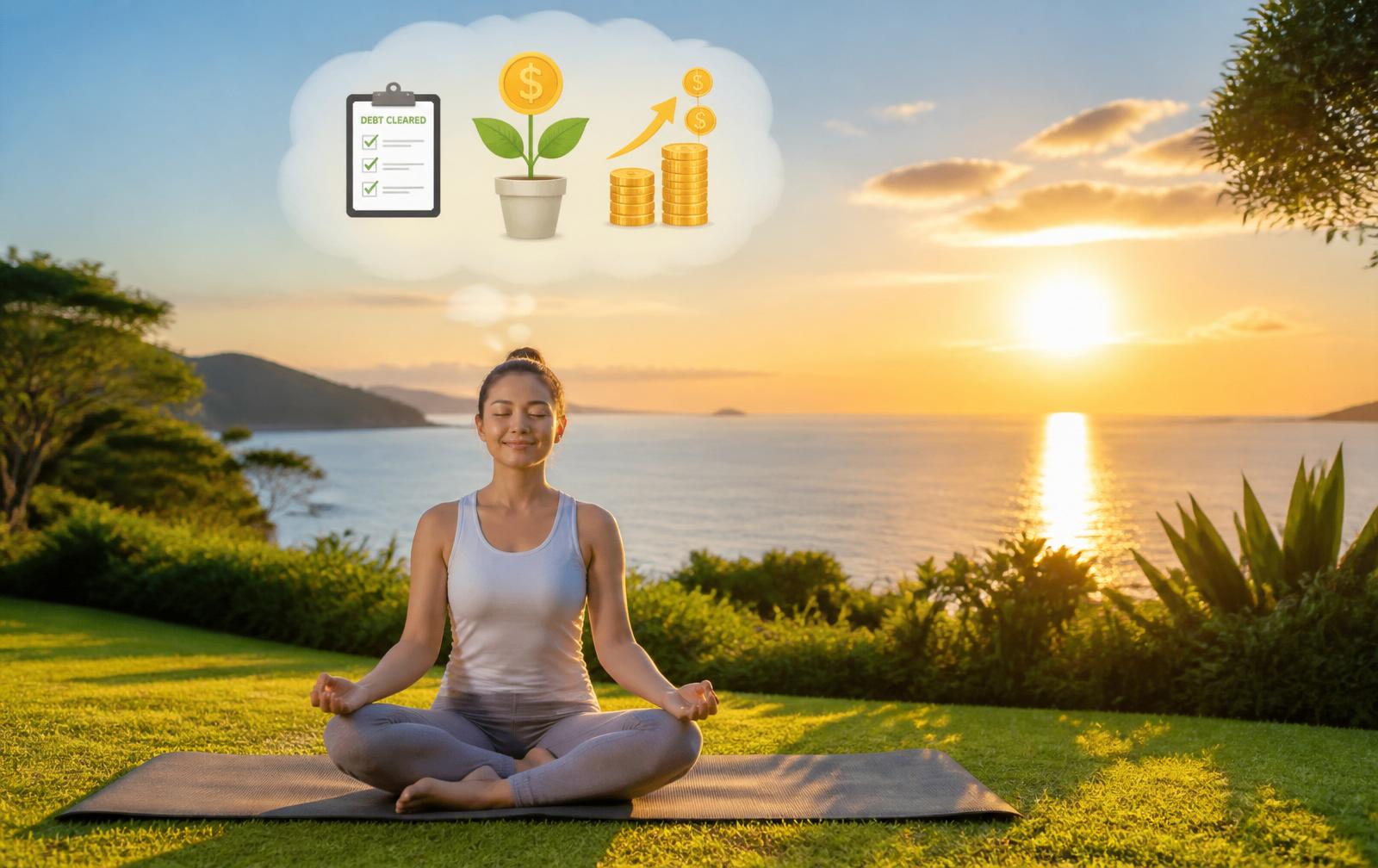
What actually changes after 30 days of daily practice
- Impulse spending Drops Dramatically. You start catching the urge before you make bad decisions. That small pause becomes long enough to make a different choice.
- Difficult Money Conversations feel dramatically less stressful. Salary Negotiations, Discussions with Partner about Spending, Calls to Banks — you enter them more settled rather than from Anxiety and this Improves Outcomes notably.
- If you are Invested in the Stock Market or own Shares the common Market Volatility Drops stop triggering Panic Sells or FOMO Buys. You start behaving like a Long-Term Investor because you now actually feel like one !
- Sleep Improves Immensely ! Which Improves Decision making and helps add to the feeling of Calmness. This alone is worth the practice. Try it for 7 Days and see what you notice
- Comparison with Social Media Influencers and Celebrities, those who seem to have it better than you stops your thikning.
- You start noticing opportunities you were previously too busy or too stressed to see. Calm Minds have Wider Opportunity Vision.
Common Meditation Barriers
"I Can't Stop my Thoughts."
You are Not Supposed to. The goal of Meditation is not an empty mind — it is noticing when you have wandered and gently returning attention to the breath. Every return is a repetition of the exercise. You are strengthening the Mind and Thoughts about actions
"I don't have 10 Minutes."
Really ? .. You have Ten Minutes ? You spend more than an hour a day on your phone. Take ten of those minutes back. We Guarantee these 10 Minutes will Improve your Life More than the wasted time scrolling useless things on your phone. TikTok and Instagram don't Improve your Life and Finances, but Meditation Will !!
"I tried and it didn't work."
Yes this a common Feedback, Meditation is a Gradual and Slow compounding practice, just like investing. Two weeks produces almost no visible return; two months produces subtle shifts; two years produces a Fundamental Change different nervous system. In the Short-Term you may not notice much, but Long-Term you will !
A simple, unfashionable truth
You will never Out-Earn Chaotic Thoughts. History is full of Lottery Winners who become Bankrupt within a Decade. Even High-Earning Professionals can Drown in Debt. Business Owners who made Wild Fortunes but lost it all because their Inner Mind and Peace Never Changed to match their Large Earnings. The Wealthiest People in the World keep some version of Meditation, Prayer and Silent Thoughts. This is not Spiritual Mystery, its Science and Mind.
Take just 10 Minutes a Day starting tomorrow. Or better still, start right now. Just close your eyes, let peace and calm settle in, and then start thinking about what you want out of your Finances
A Calm Mind is not the Reward of Wealth.
It's the Structure that helps to Build it.